Bibingka (Easy Mochi-Style Filipino Rice Cake)
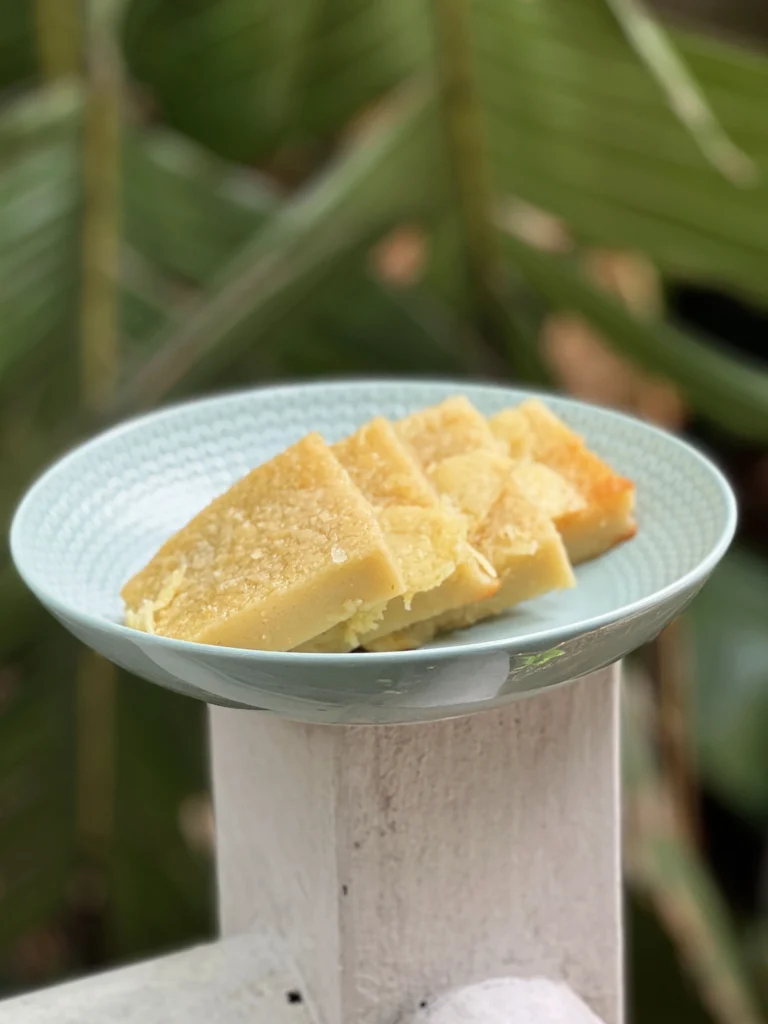
A soft, chewy, coconutty Filipino Christmas classic — made simple for the home kitchen.
Bibingka is one of the most beloved Filipino Christmas treats — traditionally sold outside churches during Simbang Gabi, wrapped in banana leaves and cooked over hot coals. It’s a festive rice cake that manages to be soft, slightly chewy, buttery, sweet, and a little savoury all at once. If you’ve never tried it before, imagine a cross between a mochi cake and a light baked custard, with a golden top and a hint of coconut. It’s comforting, nostalgic, and tastes like the holidays.
Traditional bibingka uses rice batter, salted egg, and cheese, baked in clay moulds over charcoals. My version keeps the spirit and texture of bibingka but makes it quick and achievable in a modern Australian kitchen — no clay pots or banana leaves required (though you can line your tray if you want the aroma). The glutinous rice flour gives it that mochi-like chew, while the butter, coconut milk, and cheddar bring the signature sweet–salty balance bibingka is known for.
It’s simple, festive, and perfect with a cup of coffee on a December morning… or honestly, any day of the year.
Ingredients:
- 240g glutinous rice flour
- 60g oat milk
- 120g coconut milk
- 120g sugar (plus extra for sprinkling)
- 3 eggs
- 120g grated cheddar
- 2 tbsp melted butter
Method :
- Mix the batter
Whisk together the glutinous rice flour, oat milk, coconut milk, sugar, and eggs until the batter is silky smooth with no lumps. - Bake
Pour the mixture into a greased baking tray (or line with banana leaves for aroma and authenticity).
Bake at 177°C for 20–30 minutes, or until the centre is just set. - Finish the top
Brush the warm bibingka with melted butter. Sprinkle over a little extra sugar and the grated cheddar. - Bake again
Return to the oven for another 5 minutes, until the cheese melts and the top turns lightly golden. - Serve
Slice, share, and enjoy warm. The texture should be soft, chewy, mochi-like, buttery, sweet, and a little umami — exactly what makes bibingka such a Filipino holiday favourite.