Coconut Adobo Beef Rib Bowl
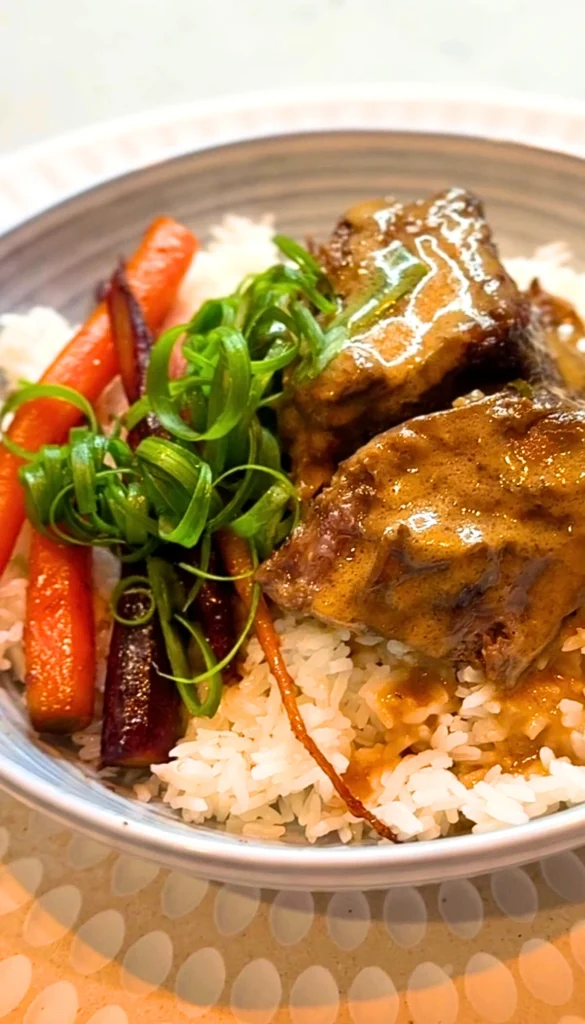
A rich Filipino adobo with creamy coconut and sweet soy-glazed carrots
Adobo is one of the most beloved dishes in Filipino cooking. At its core, it’s a beautifully simple braise built around soy sauce, vinegar, garlic and black pepper. Slowly simmered together, these ingredients create the bold savoury flavour that makes adobo so recognisable and comforting.
Every Filipino household cooks adobo a little differently. Some versions are darker and richer, others more tangy and sharp with vinegar. In some regions of the Philippines, cooks add coconut milk, creating a style sometimes known as adobo sa gata. The coconut softens the sharpness of the vinegar and adds a silky richness to the sauce while still keeping that unmistakable adobo flavour.
For this version I use beef ribs, which slowly braise until meltingly tender and soak up all the garlicky, savoury sauce. The coconut milk adds depth and body, creating a rich sauce that’s perfect for spooning over rice.
To balance the bold flavours of the ribs, I add buttery soy and honey glazed carrots. They bring a gentle sweetness and freshness to the bowl, making the whole dish feel balanced and complete.
Served together with rice, the tender ribs, glossy sauce and sweet carrots make for a deeply comforting bowl that celebrates the bold flavours of Filipino cooking.
Ingredients:
For the coconut adobo beef ribs
- 1 kg beef short ribs
- 1 tablespoon neutral oil
- 6 cloves garlic lightly crushed
- 1 brown onion sliced
- ½ cup soy sauce
- ⅓ cup white vinegar
- 1 cup beef stock or water
- 1 cup coconut milk
- 2 bay leaves
- 1 teaspoon whole black peppercorns
- 1 teaspoon brown sugar (optional)
- Salt and freshly cracked black pepper to taste
For the soy honey garlic carrots
- 1 bunch baby carrots
- 60g butter
- 2 cloves garlic minced
- 2 teaspoons honey
- 1 teaspoon soy sauce
To serve
- Steamed jasmine rice
- 2 spring onions finely sliced
- Extra cracked black pepper
Method :
Cook the adobo ribs
Heat the neutral oil in a large heavy based pot or Dutch oven over medium high heat.
Season the beef ribs lightly with salt and pepper. Add them to the pot and sear on all sides until deeply browned. This step builds flavour in the final dish.
Remove the ribs and set aside.
In the same pot add the crushed garlic and sliced onion. Cook for two to three minutes until fragrant and slightly softened.
Return the beef ribs to the pot.
Pour in the soy sauce, vinegar and beef stock. Add the bay leaves and whole black peppercorns.
Bring the mixture to a gentle simmer and allow it to cook uncovered for a few minutes so the sharp vinegar aroma softens.
Reduce the heat to low, cover and allow the ribs to braise gently for about one and a half to two hours, or until the beef becomes very tender.
Once the ribs are tender, stir in the coconut milk and allow the sauce to simmer gently for another ten to fifteen minutes until it becomes silky and slightly thickened.
Taste the sauce and adjust seasoning if needed. Add the brown sugar if you prefer a slightly balanced sweetness.
Cook the soy honey carrots
- While the ribs are finishing, prepare the carrots.
- Bring a small pot of salted water to the boil and cook the baby carrots for about five minutes until just tender. Drain well.
- Heat a frying pan over medium heat and melt the butter.
- Add the minced garlic and cook briefly until fragrant.
- Add the carrots and toss to coat them in the butter and garlic.
- Drizzle in the honey and soy sauce and continue cooking for another two to three minutes until the carrots become glossy and lightly glazed.
Assemble the bowl
- Spoon hot steamed rice into serving bowls.
- Top with the tender coconut adobo beef ribs and plenty of the rich sauce.
- Add the soy honey glazed carrots alongside.
- Finish with sliced spring onions and a little cracked black pepper.
- Serve immediately.
Gregson’s Tip
Adobo often tastes even better the next day. As the dish rests, the sauce continues to soak into the meat and the flavours deepen beautifully. If you have leftovers, gently reheat them and serve with fresh rice.